
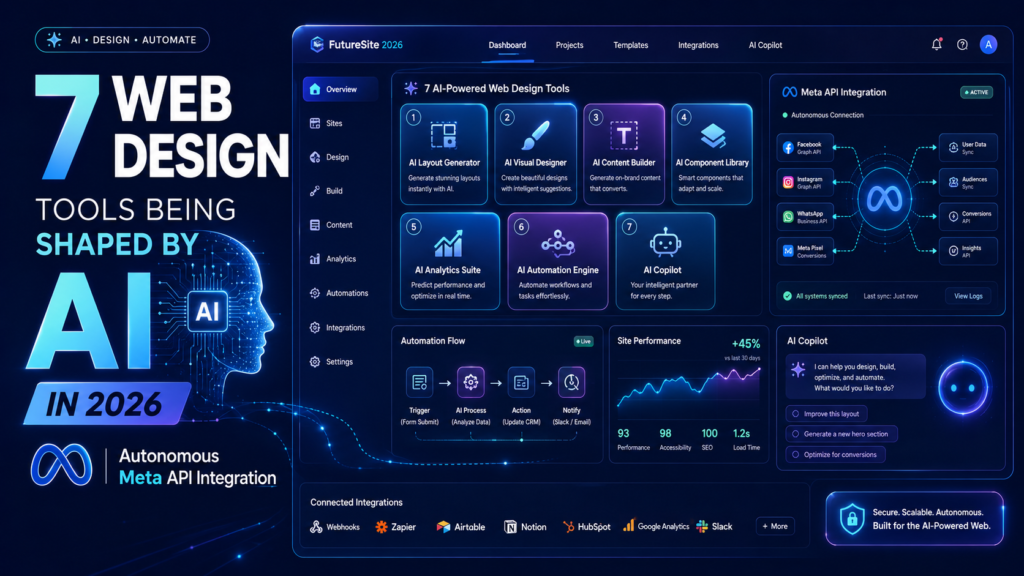
7 Web Design tool Being Shaped by AI in 2026
7 Web Design tool Being Shaped by AI in 2026: Proven Secrets to Autonomous Execution Are you still wasting hours downloading AI-generated images, manually formatting them for TikT...
7 Web Design tool Being Shaped by AI in 2026: Proven Secrets to Autonomous Execution
Are you still wasting hours downloading AI-generated images, manually formatting them for TikTok, and uploading them to Ad Manager? Let’s be brutally honest: it is exhausting. In 2026, that manual workflow is dead. Welcome to the era of autonomous execution. If you want to scale your digital presence, you must master the 7 Web Design tool Being Shaped by AI in 2026. This is no longer about static generators; it is about deploying intelligent agents that build, test, and publish while you sleep.
The Fatal Flaw of Traditional AI Creative Tools
Think back to 2024. What was the standard operating procedure? You wrote a clever prompt. You waited. You downloaded the resulting image. Then, the real, mind-numbing work began. You had to crop it. You had to manually resize it for Instagram Reels, TikTok, and web banners. Finally, you had to log into Facebook Ads Manager, set up the campaign, and hit publish.
This fragmented workflow is the fatal flaw of traditional AI creative tools. They were merely static generators, not doers. They handed you raw materials but forced you to build the house yourself. In today’s hyper-competitive digital landscape, manual formatting is a massive bottleneck. It drains creative energy, destroys ROI, and leaves you vulnerable to competitors who execute faster.
Deep Dive: 7 Web Design tool Being Shaped by AI in 2026
This brings us to the core shift in the industry. The difference between a struggling agency and a thriving enterprise today is absolute automation. Here is a deep dive into the 7 Web Design tool Being Shaped by AI in 2026—and how they are replacing static workflows with autonomous magic.
1. Framer Autonomous (The Structural Agent)
Framer isn’t just a site builder anymore. It acts as an autonomous agent. You feed it a conversion goal, and it dynamically alters the layout, running multivariate tests without human intervention.
2. Figma Auto-Execute (The Conversion Catalyst)
Figma has evolved from a collaborative canvas to a deployment engine. It connects directly to your live site, adjusting UI components based on real-time user heatmaps.
3. Midjourney V9 Enterprise (The Asset Factory)
Forget Discord prompts. The enterprise version now plugs directly into your CMS. It reads the surrounding article text and auto-generates contextual, perfectly sized hero images on the fly.
4. Webflow Neural (The Code-Free Publisher)
Webflow’s AI now writes bespoke CSS and animations based on voice commands, instantly pushing them live to A/B testing environments.
5. Canva Omni-Channel (The Format Master)
Canva has eradicated the manual resize button. You design one core concept, and the agent automatically splices, animates, and distributes it in 40 different aspect ratios perfectly optimized for every social platform.
6. AdCreative Sentient Engine (The Media Buyer)
This tool bridges the gap between design and distribution. It generates the ad creative, writes the copy, and automatically adjusts the contrast and text-safe zones specifically for TikTok’s interface.
7. Jasper Web-Architect (The Narrative Designer)
Jasper no longer just writes blog posts. It designs the entire wireframe around the narrative, ensuring the visual hierarchy perfectly matches the psychological flow of the copy.
Agents That Generate and Execute vs. Static Generators
The paradigm shift here is profound. When evaluating the 7 Web Design tool Being Shaped by AI in 2026, the defining characteristic is agency. Static generators require human babysitters. Execution agents do not. They generate, format, test, and publish in one seamless loop. This frees human designers to focus on high-level strategy and emotional resonance rather than pixel-pushing.
The Magic of Direct API Distribution on Meta and TikTok
Why does all this automation matter? Because of the API revolution. The true power of these platforms lies in their direct API distribution on Meta for Developers and TikTok Business Center.
Imagine an autonomous workflow: The design tool detects a trending audio track on TikTok. It automatically pulls your product assets, generates a 15-second vertical video, overlays auto-captions, and pushes it directly to your TikTok Ads Manager via API. It allocates a test budget automatically. If the ROAS exceeds your target, it scales the budget. All without a single human click.
This direct pipeline eliminates human error, bypasses clunky browser interfaces, and capitalizes on micro-trends faster than any human team ever could. It is the ultimate competitive advantage.
We are standing at the precipice of a new creative era. The days of manually moving pixels from a generator to an ad platform are permanently over. By embracing the 7 Web Design tool Being Shaped by AI in 2026, you aren’t just saving time—you are fundamentally upgrading your operational velocity. The future belongs to those who execute autonomously. Are you ready to let the agents take the wheel?
Related articles
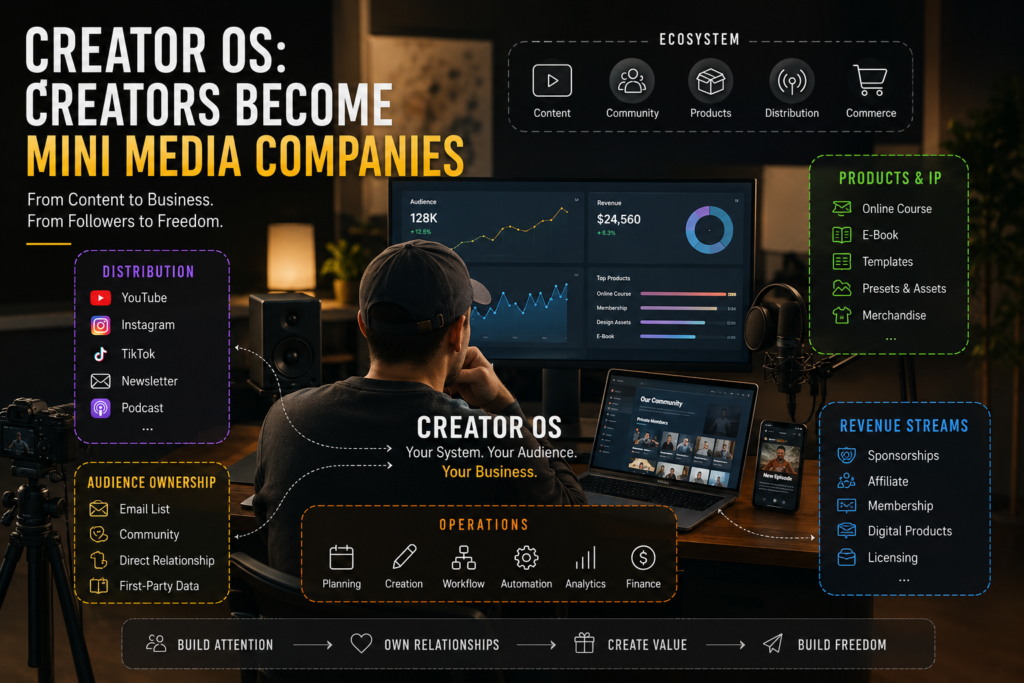
Creator OS: Build Your Mini Media Company
Creator OS Revealed: The Ultimate Guide to Building a Mini Media Company The Era of the Influencer is Dead. Welcome to the Creato...
Why AI Aesthetics Are Boring Audiences: The Proven Secret to Anti-AI Design
Let's be brutally honest for a moment. Have you scrolled through your social media feed lately and felt… absolutely nothing? Yo...